What is food irradiation?
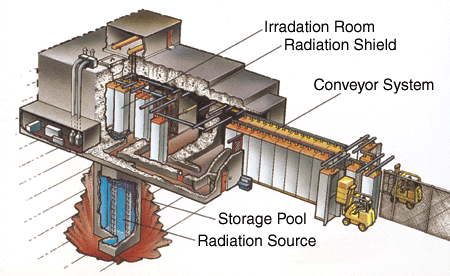
Food irradiation is the treatment of food with a type of radiation energy known as ionizing radiation. Three different types of radiation are allowed: Gamma rays, X-rays and electron beam radiation. Ionizing radiation at the levels used for food irradiation contains enough energy to kill bacteria, molds, parasites and insects.
Why would we irradiate food?
Irradiation is used in food processing to reduce microbial load on spices and dehydrated seasoning prep, meaning it destroys bacteria, molds and yeast which cause food to spoil.
It controls insects in wheat, flour and whole wheat flour, and increases shelf life by preventing sprouting or germination in potatoes and onions.
Are irradiated foods safe to eat?
Extensive research and testing resulted in irradiation becoming widely recognized as a safe and effective method of reducing harmful bacteria in food products. Foods treated with irradiation are safe to eat and retain their nutritional value, taste, texture and appearance. Health Canada reviews petitions to allow the irradiation process to be applied to different types of foods before they can be sold in Canada. The Food and Drug Regulations also specify the source, the energy level and the total absorbed dose for the identified food.
What irradiated foods can be sold in Canada?
To date, the following products have been approved by Health Canada for irradiation: potatoes, onions, wheat, flour, whole wheat flour, whole and ground spices, and dehydrated seasoning preparations.
How can I tell if food has been irradiated?
Pre-packaged foods that have been wholly irradiated must display the international radiation symbol, along with a statement that the product has been irradiated. Food that is not pre-packaged must have a sign with this information displayed beside the food.

Pre-packaged foods that contain an irradiated ingredient which is 10 per cent or more of the finished product must be identified in the list of ingredients as “irradiated”. If the ingredient makes up less than 10 per cent of the finished product, it is exempt from the labeling requirements.
When exploring ideas for my blog, I saw food irradiation in a long list of possible topics, and realized I really didn’t understand what food irradiation is. The first time I had read it, I thought that it was the exposure of food to ground radiation, but was mistaken. After researching online using the Canadian Food Inspection Agency guides, I was able to learn much more about exactly what food irradiation is and why we do it.
Learning that irradiated food is marked with the green radiation logo, I went into my cupboards to try and see if I could find it on anything we had in the house. I was unfortunately not able to find the irradiated logo on our all purpose flour, skinned baby potatoes, or on anything in our spice drawer. I say unfortunately loosely, because it would have been nice to see for myself for research purposes, but I am neither opposed nor against irradiated foods.
The idea of irradiated foods seems positive, and is backed by an obvious massive amount of research and study for it to be sold to consumers on supermarket shelves. I infer that we will begin to see the irradiated logo on not only more 2019 approved foods, but the horizons will expand for possible foods that can be irradiated in the near future.
Works Cited
Food Irradiation. (October 2016). Canadian Food Inspection Agency. Government of Canada. Retrieved from http://www.inspection.gc.ca/food/information-for-consumers/fact-sheets-and-infographics/irradiation/eng/1332358607968/1332358680017
Irradiated Foods. (January 2019). Canadian Food Inspection Agency. Government of Canada. Retrieved from http://www.inspection.gc.ca/food/requirements/labelling/industry/irradiated-foods/eng/1334594151161/1334596074872
 Jake's HFA4U Blog